
SeaTac Directory Collections by Era
No publication run is confirmed as a complete SeaTac city directory. The useful shelf is regional. Seattle Public Library supplies the broadest directory series, while King County Library System, Highline Heritage Museum, county archives, and state repositories fill gaps with film, newspapers, oral histories, land files, and marriage records. SeaTac incorporated only in 1990, so a modern city-name query can miss most earlier residents.
| Collection | Years | Where Held | Access |
|---|---|---|---|
| Seattle and Puget Sound directories | Selected volumes, 1867-1940 | Seattle Public Library digital collection | Free online search and decade browse |
| Seattle City Directories | 1890-1990 | Seattle Central Library, Seattle Room | Physical research collection |
| KCLS genealogy and microfilm | Titles and dates vary | Valley View Library and reference service | Branch, email, and database access |
| Highline newspapers and oral histories | Highline Times, 1940s-early 1990s; oral histories vary | Highline Heritage Museum | Appointment and reproduction rules |
| Historical property cards | About 1937-1972 | Puget Sound Regional Archives | Archive research and requests |
| King County marriages | 1855 forward, changing coverage | Washington State Digital Archives | Online index and some images |
The missing SeaTac-only run matters. KCLS does not promise a particular local reel online, and no confirmed digitized criss-cross set for present-day SeaTac was found. Ask staff by title, year, surname, street, and predecessor community. A narrow request is more likely to locate a book or film than a broad demand for every resident.
Search SeaTac Names in Regional Books
The Seattle Public Library city-directory collection is the strongest online start. Its selected directories span Seattle, Puget Sound, Washington State, and the Pacific Coast from 1867 through 1940. Pages can be searched as text or browsed by decade. Search a surname, initials, street, school, church, or business, then inspect the page image because optical text can misread old type.
The 1928 Seattle House and Street Directory changes the search direction. Begin with a house number and street instead of a name. That address-first arrangement can identify the printed householder and nearby entries. The broader physical run from 1890 through 1990 is described in the Seattle City Archives genealogy guide, and later city directories may require an in-person library search.
View the digitized directory search as it appears online.
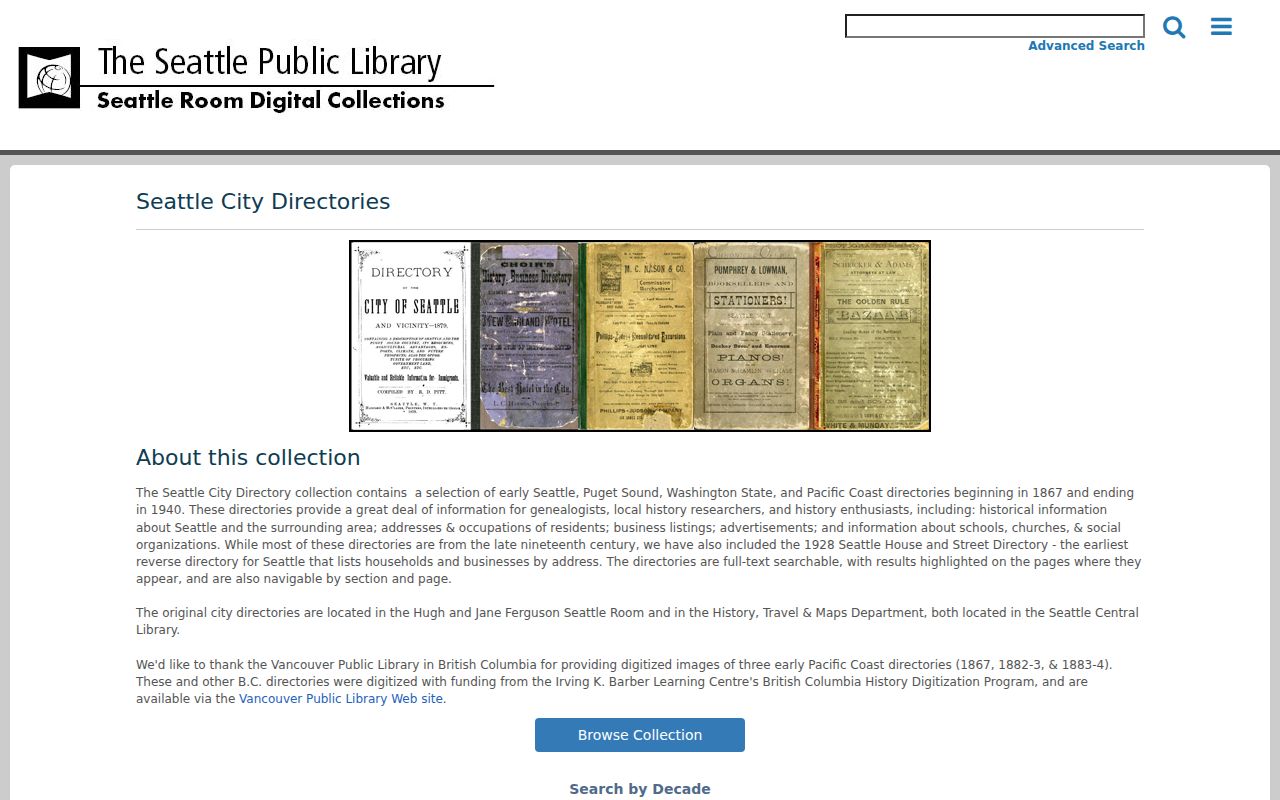
The captured collection page confirms the digital route and gives readers a stable starting place before asking for an unscanned volume.
Note: A text-search miss may reflect poor scanning, initials, a spouse's name, or a regional label rather than a person's absence.
Read a SeaTac Directory Entry
A directory entry is a dated clue, not proof that someone remained at an address for the whole year. The confirmed digital layout can show the volume year, alphabetical or street section, printed name, address, business or organization line, and page number. Directory traditions also used occupation, spouse, residence, boarding, or owner marks, but meanings vary by volume. Save the abbreviation key before interpreting a short code.
| Printed name | Record spelling, initials, and spouse or household wording exactly. |
|---|---|
| Address | Keep the house number, direction, street form, and postal label as printed. |
| Business or organization | Treat it as a dated affiliation, not a home-address substitute. |
| Section and page | Note alphabetical or street order and cite the page. |
| Volume year | Use the date as the outer limit of what the entry can establish. |
- Criss-cross directory
- A book arranged by street or phone number, allowing a search from an address toward a listed name.
- Householder index
- An address-ordered list of the person or household named for a dwelling.
- Abbreviation key
- The volume's explanation for shortened occupation, address, and household marks.
Transcribe first, interpret second. A common surname needs another source. A business line may name a business location. An entry can be stale by publication time, and an omitted relative may still have lived in the household. Preserve uncertainty instead of expanding one terse line into unsupported claims.
SeaTac's Older Directory Names
The SeaTac name is a late layer in local records. A 1989 mail vote led to formal establishment in 1990, and the ballot used “Sea-Tac” even though the city adopted the unhyphenated form. Before then, directories and papers may use Highline, Angle Lake, Bow Lake, McMicken Heights, Riverton Heights, or Sunnydale. They may file an address under Seattle, another postal place, a school district, or rural King County.
Road language matters. International Boulevard was formerly Highway 99 within SeaTac. A family can remain near the same place while the printed road label changes. Search both forms, test the direction and street suffix, and retain the old label in the notes. Do not force today's city name onto a source that used another identity.
| Date marker | Search effect |
|---|---|
| Before 1990 | Try Highline communities, postal labels, school districts, and county descriptions. |
| 1990 | Add SeaTac without dropping older terms. |
| Road-name transition | Search both International Boulevard and Highway 99. |
| 1991 onward | Use newer recorder images to test an address found in a directory. |
A modern boundary does not control how an old publisher indexed people. Search terms must follow the year and source.
SeaTac Directory Help at Valley View
Valley View Library is the closest practical reference desk for a local city directory question. The branch at 17850 Military Road S grew from McMicken Library in 1954, then Valley Ridge in 1960, and opened as Valley View in 1982. That path mirrors the community names found in older sources. The branch phone is 206-242-6044, but hours should be checked before a visit.
The KCLS genealogy service points to microfilm from the Family History Library, National Archives, Washington State Archives, and regional sources. It also covers papers, census, vital, school, voter, property, and county-history material. Reference staff may help name a directory title or find an obituary copy. Some databases need a library card or branch connection.
Give the surname, street, approximate year, and likely community label. Since the catalog does not expose an exact SeaTac run, do not assume a reel is present. Save the staff response, catalog record, or call number with the citation.
Note: Valley View Library can locate sources, but it does not hold a complete roll of present or historical SeaTac residents.
Highline Voices Beyond SeaTac Directories
A printed city directory favors people and firms chosen for publication. The Highline Heritage Museum adds voices, photos, schools, airport history, and papers that may never appear in a book. Its profile reports more than 300 oral histories and bound Highline Times volumes from the 1940s through the early 1990s. Those holdings fit the years when present-day SeaTac was still described through Highline communities.
See the Highline Heritage Museum's collection entry point.
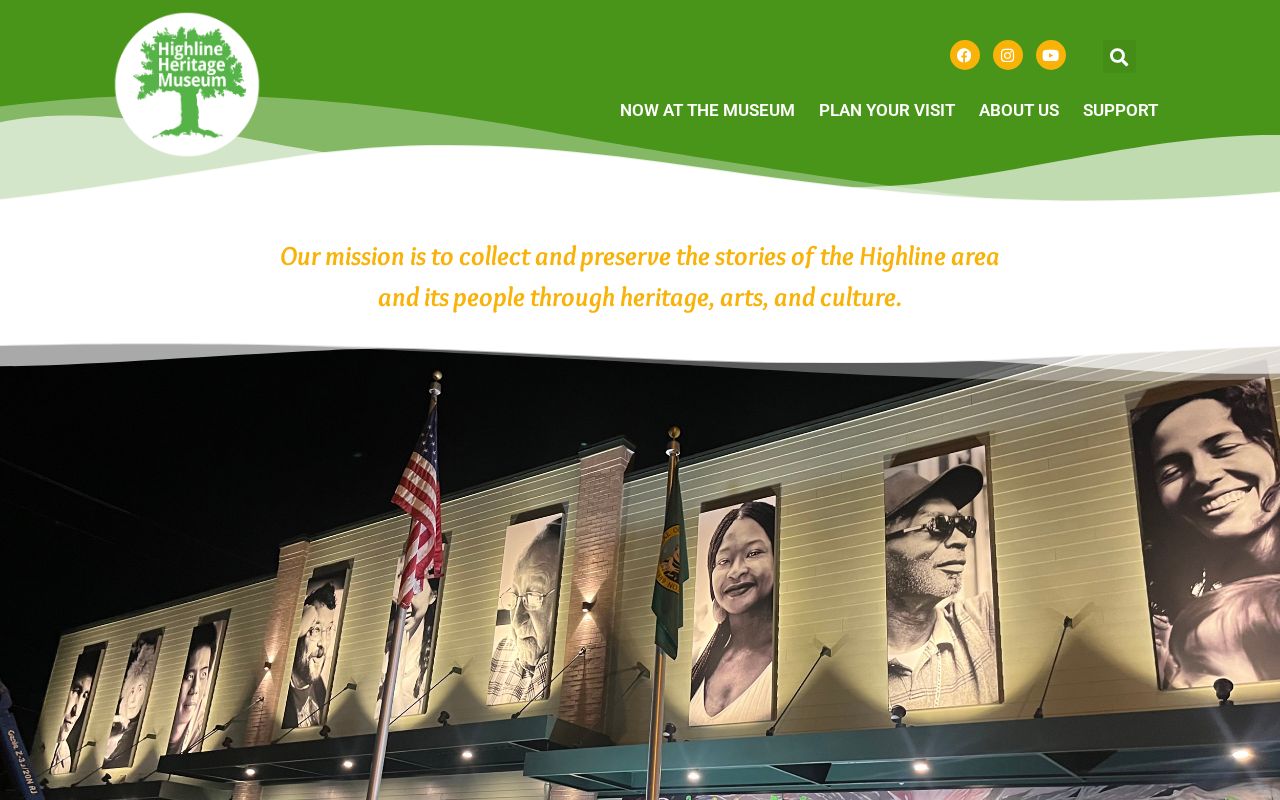
The museum view shows why local resident work often belongs in a regional collection, not under the city name alone.
Research access is by appointment for collections, and reproduction rules apply. Ask about one surname, street, school, community, and date range. An oral history, photograph, school file, or paper may restore the human setting around a sparse directory entry.
Trace SeaTac Families Across Years
A sound family-history search moves one year at a time. Pair city directories with census years, then use a deed, marriage, probate, or obituary source only where it answers a gap. This keeps names, addresses, and family roles from being blended across people who share a surname.
- Find the first likely entry and copy its exact year, name, address, section, and page.
- Check nearby years for spelling changes, moves, new work lines, or first and last appearance.
- Use the 1928 reverse directory when the address is stronger than the name.
- Compare the nearest census or property card, keeping owner, taxpayer, and resident roles separate.
- Test name changes through the King County marriage collection, probate files, or an obituary request.
Disappearance does not prove death. The person may have moved, declined a listing, changed names, been indexed under a relative, or fallen into a publication gap. Record the last confirmed year and first missing year. That interval gives archive staff a useful range.
Connect SeaTac City Directories to Deeds
An address from a directory can be checked against land records, but ownership and residence differ. Start with the legal description and present parcel, then use King County Recorder's Landmark Web. Its general index reaches 1976, and most online images begin August 1, 1991. Earlier originals and microfilm route to King County Archives.
Historical property cards at Puget Sound Regional Archives cover about 1937 through 1972 and may show legal description, owner or taxpayer, building facts, value, and photos. They can test whether a directory address referred to the same structure. They still do not prove that the taxpayer lived there.
The SeaTac street directory handles the modern address and parcel chain when the work shifts from old books to current address-keyed records.
SeaTac Directory Evidence Has Limits
A city directory is a snapshot. It may omit unlisted people, children, short-term occupants, people beyond the publisher's boundary, and anyone filed under another name. Full-text search can fail when the printed line is visible. The sound conclusion is modest: a named entry appeared in a certain publication, section, and year.
Use all access channels when the web stops. Seattle Public Library holds physical volumes. KCLS offers reference and microfilm help. Highline Heritage Museum accepts focused questions. King County Archives provides appointments, remote consultation, and older land files. Washington State Digital Archives supplies historical indexes. None supports a claim that every SeaTac resident is online.
Research carefully. Cite the year and keeper, respect collection rules, and do not use historical names or addresses to harass or harm anyone.